


Every time I talk about Affective Foresight, someone asks the same question afterward:
Where do I start reading?
The honest answer is that this field does not have a canon yet. What it has is a pile of excellent work scattered across cognitive psychology, neuroscience, clinical research, futures studies, and a few books nobody would shelve anywhere near foresight. That is exactly the point of this Affective Foresight blog. The evidence has been accumulating in separate disciplines for thirty years with nobody trying to put it all on one table.
I have been collecting a list of books for a few years now. Lined up together, they tell the story of Affective Foresight, that Emotion and future-thinking form a causal loop that influence each other.
Here is the first of what I hope to be many successive lists in no particular order with what each one uniquely contributes.
Daniel Gilbert and Tim Wilson, the whole body of work
Wilson and Gilbert’s work is probably most well known to researchers. Their 2003 chapter on affective forecasting, which named the impact bias, our habit of overestimating how intensely and how long a future event will make us feel something, followed by the 2005 “Knowing What to Want,” connecting those mispredictions to goal pursuit and motivation. Then came Stumbling on Happiness in 2006, still the most enjoyable book on this list, which takes the research public through questions like why we forgive infidelity faster than dirty dishes. And in 2013, the End of History Illusion, the finding that we all believe we finished changing sometime last Tuesday. We remember a decade of transformation behind us and imagine a decade of stability ahead.
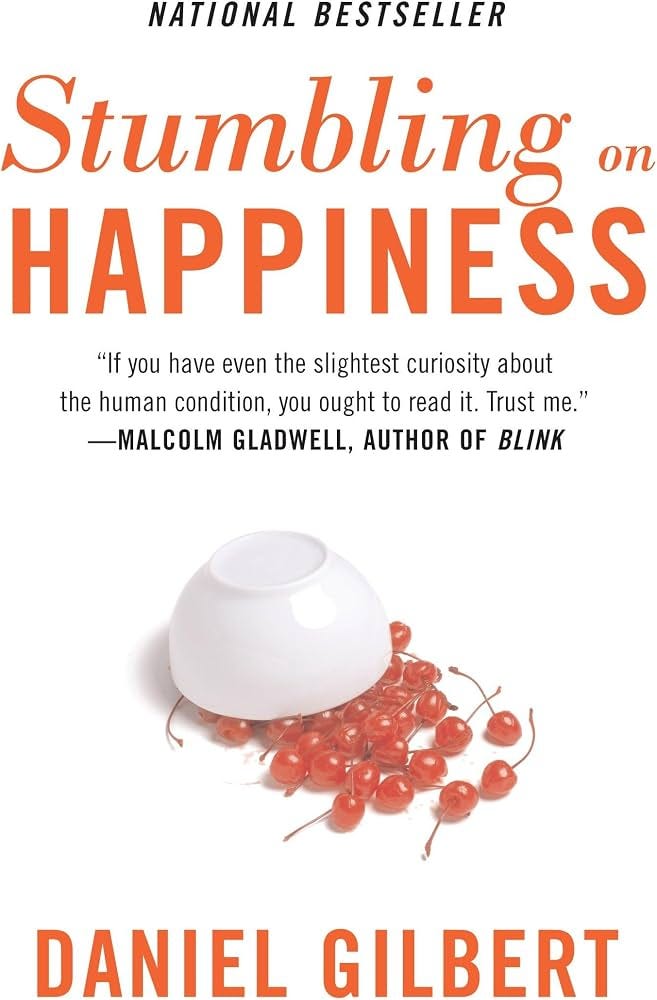
Contribution: Many aspect of affective foresight can be traced back through this work. The End of History Illusion is the one I use most in rooms, because clients routinely plan for a future version of themselves they have already stopped believing will be different.
Oettingen, Sevincer and Gollwitzer (2018), The Psychology of Thinking about the Future
The textbook I am currently reading. Peer-reviewed chapters on how people actually construct futures in their heads. Oettingen’s mental contrasting research is the star finding: simply fantasizing about a good outcome drains the energy you need to pursue it.
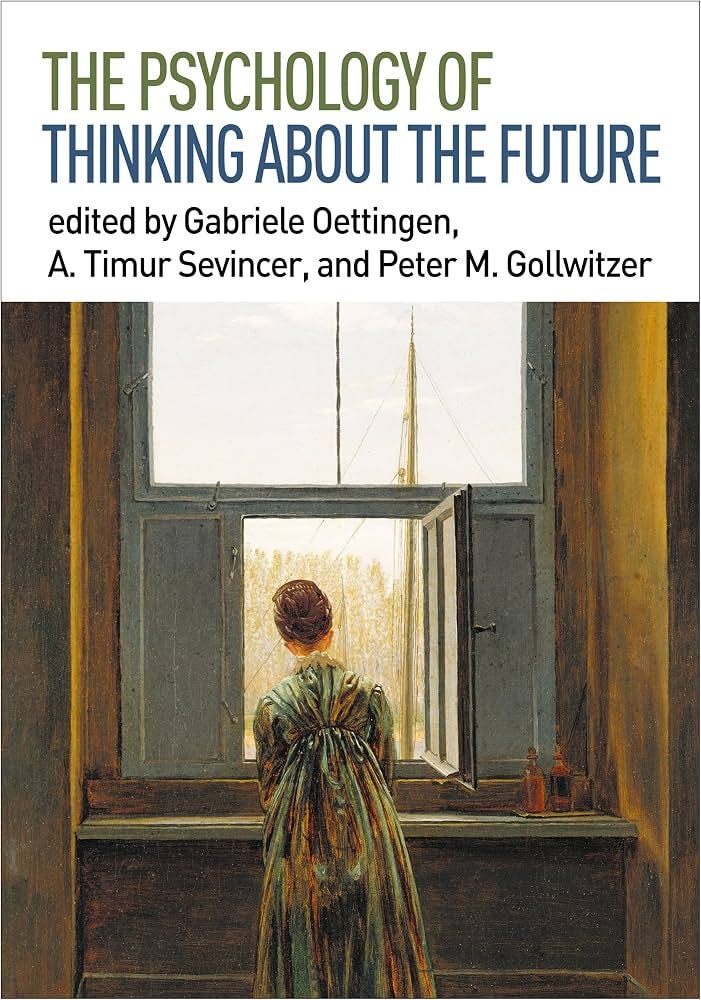
Contribution: the academic backbone. If you want to argue that this is a real research area and not a vibe, start here.
Seligman, Railton, Baumeister and Sripada (2016), Homo Prospectus
Four heavyweights argue that what defines our species is not wisdom or tool use but prospection. In their account, emotions are evaluations of simulated futures.
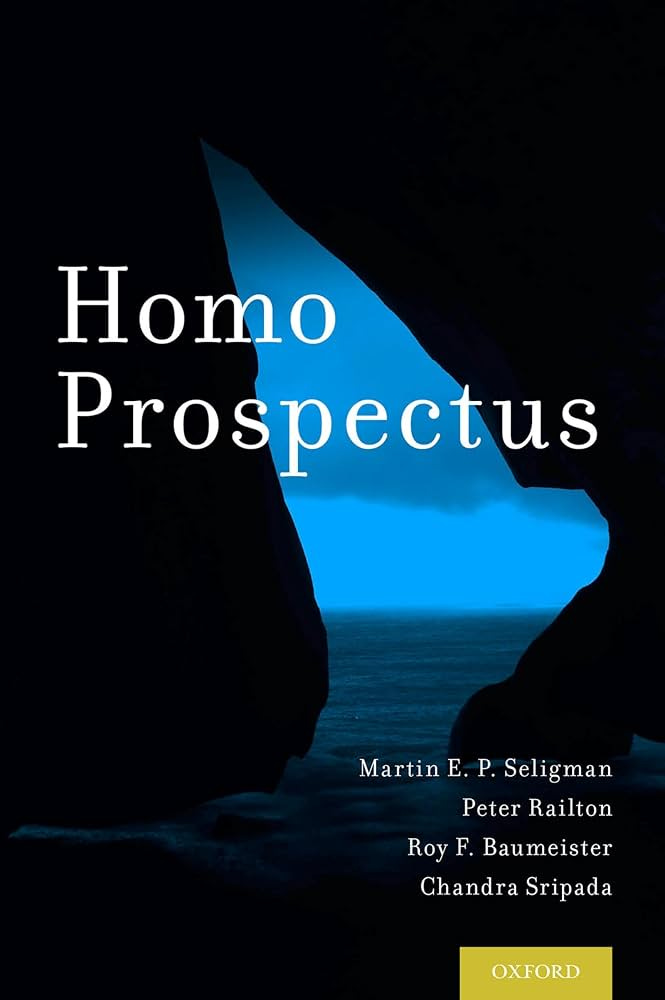
Contribution: it reframes the whole discipline. Foresight is not a professional specialty, it is the core human operating system, and emotion is its scoring function.
David McRaney (2022), How Minds Change
I wrote about this one recently and it earned its place. McRaney follows deep canvassers, cult defectors and street epistemologists to show that people rarely change their minds because of better evidence. They change when they feel safe enough to think out loud.
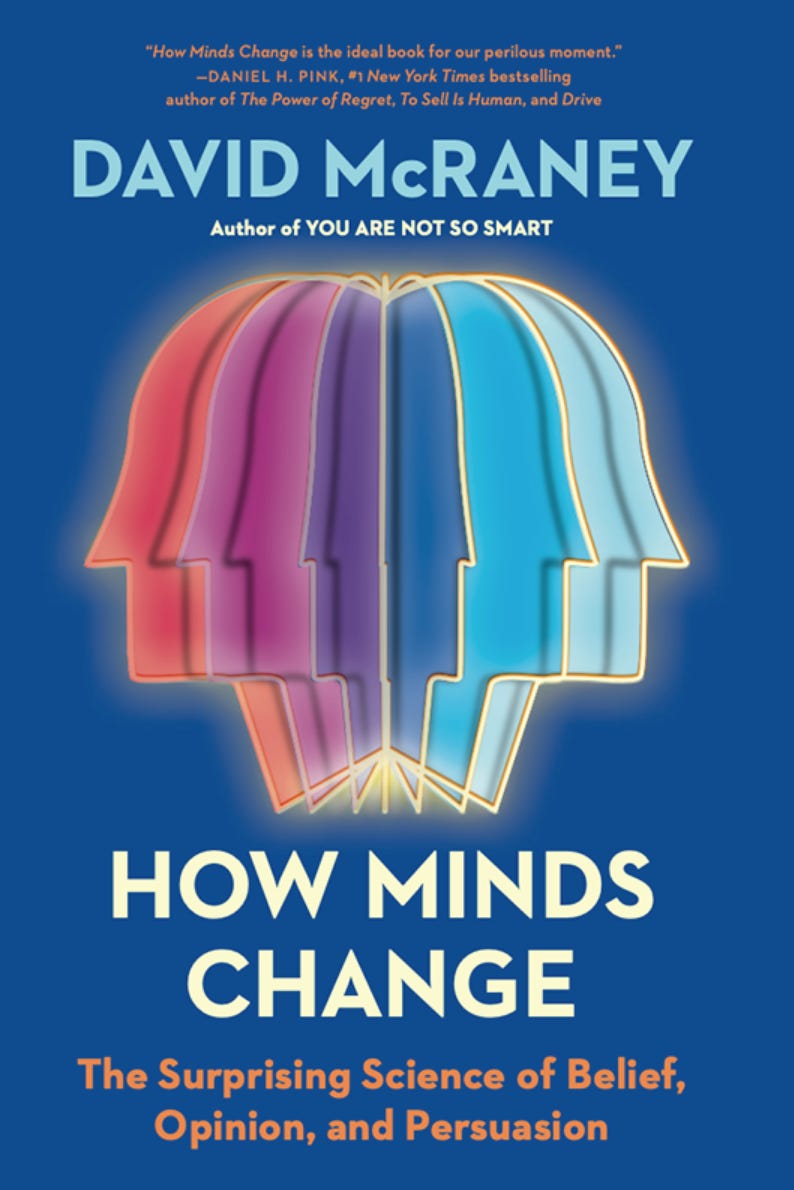
Contribution: the emotional preconditions for accepting a future you do not already believe in. A scenario that threatens someone’s identity gets rejected no matter how rigorous your research was.
Richard Yonck (2017), Heart of the Machine
The only book in this list written by an actual futurist, Yonck traces affective computing from its origins toward a future where machines read, simulate and shape our emotions. Now celebrating its 10th anniversary of publication, it is also where I first borrowed the word affective.
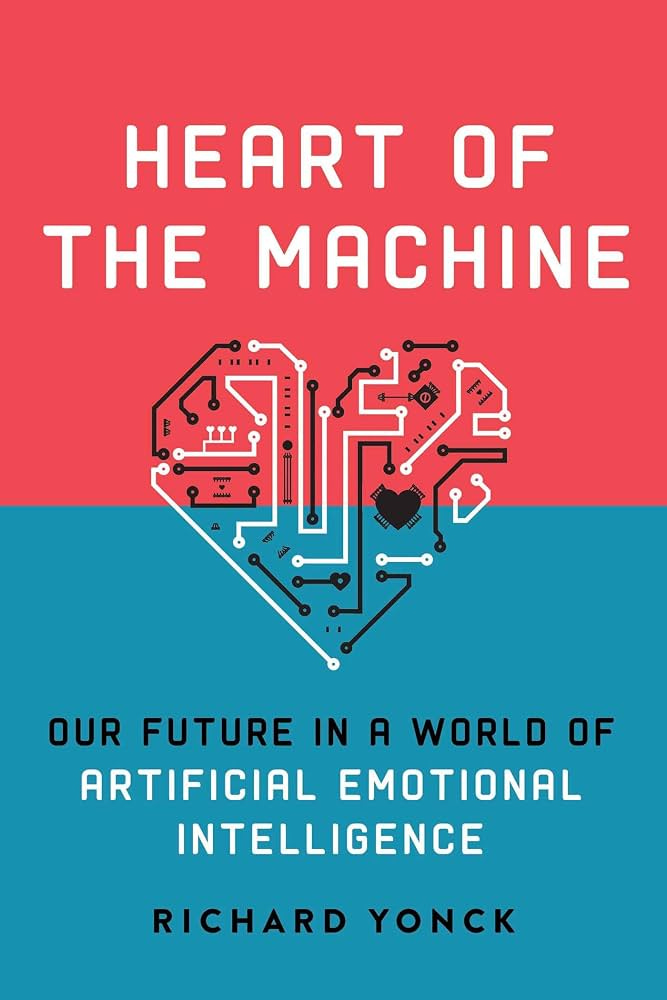
Contribution: it puts emotion on the horizon as infrastructure rather than as a soft human quirk, and asks what happens when the technology around us reads our feelings better than we do.
Peter McGraw and Joel Warner (2014), The Humor Code
McGraw ran the Humor Research Lab at the University of Colorado, and this is the book where he and journalist Joel Warner take his benign violation theory on the road, from Japanese comedy clubs to the Amazon to Palestine, testing whether anything about funny holds up across cultures. The theory itself is simple and useful: we laugh when something violates how we think the world should work, while simultaneously feeling safe. Too benign and it is boring. Too much violation and it is threatening. The comedy lives in the overlap.
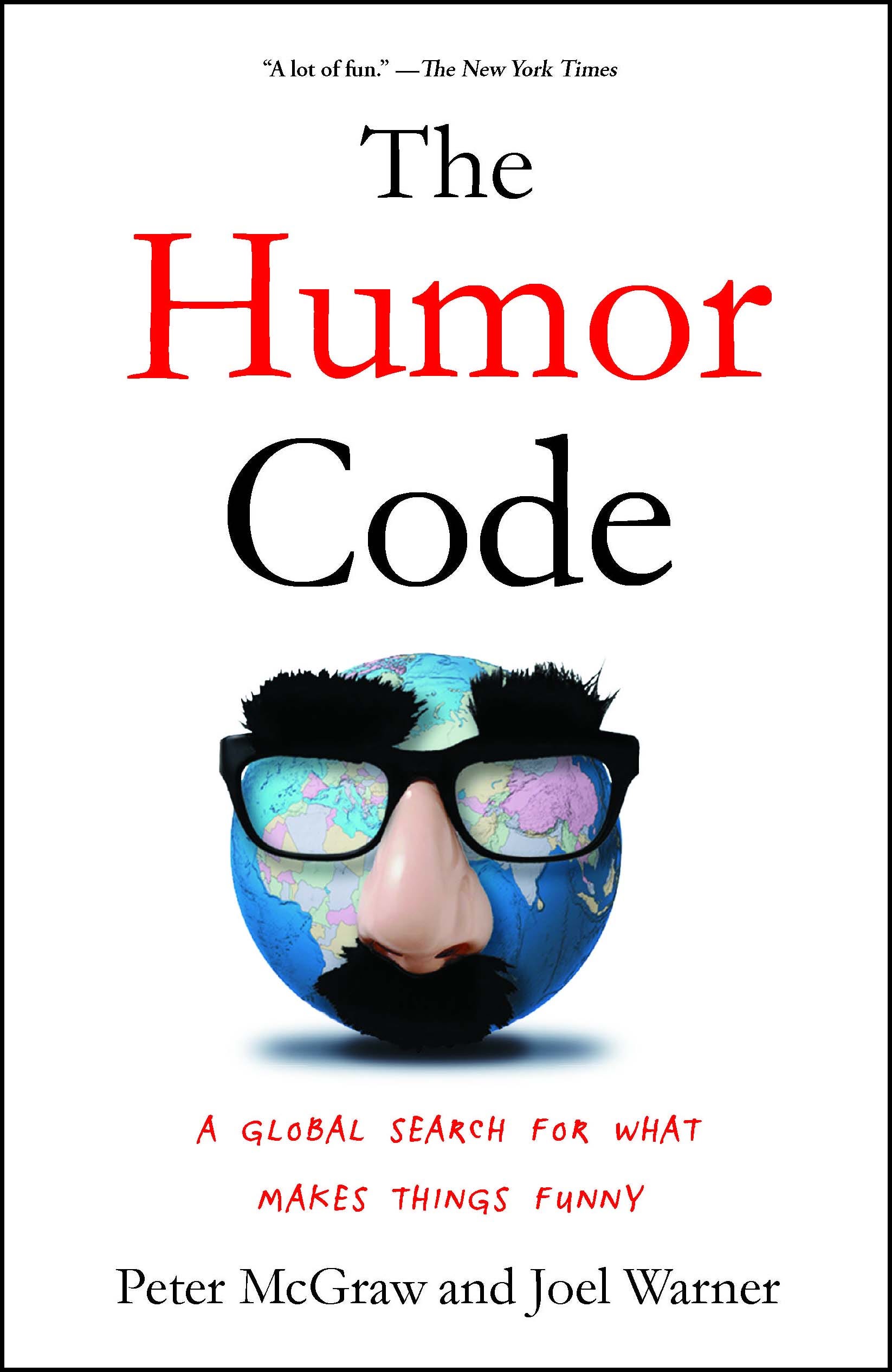
Contribution: the mechanism behind Dator’s second law. If any useful statement about the future should at first seem ridiculous, then benign violation theory explains what is actually happening in the room when a scenario gets a laugh. The group has registered a violation of their expected future and processed it as safe enough to keep looking at. That makes laughter one of the few real-time signals we have that a genuinely novel future has landed instead of bouncing off. It also explains the failures. The scenario that gets silence rather than laughter usually crossed from benign into threatening, which means the group stopped exploring and started defending.
Laurence Gonzales (2003), Deep Survival
(Haven’t read yet, but was suggested by a colleague) A book about who lives and who dies in wilderness emergencies, and secretly one of the best books on futures thinking ever written. Survivors update their mental model fast. The dead keep bending the map to match the future they expected.
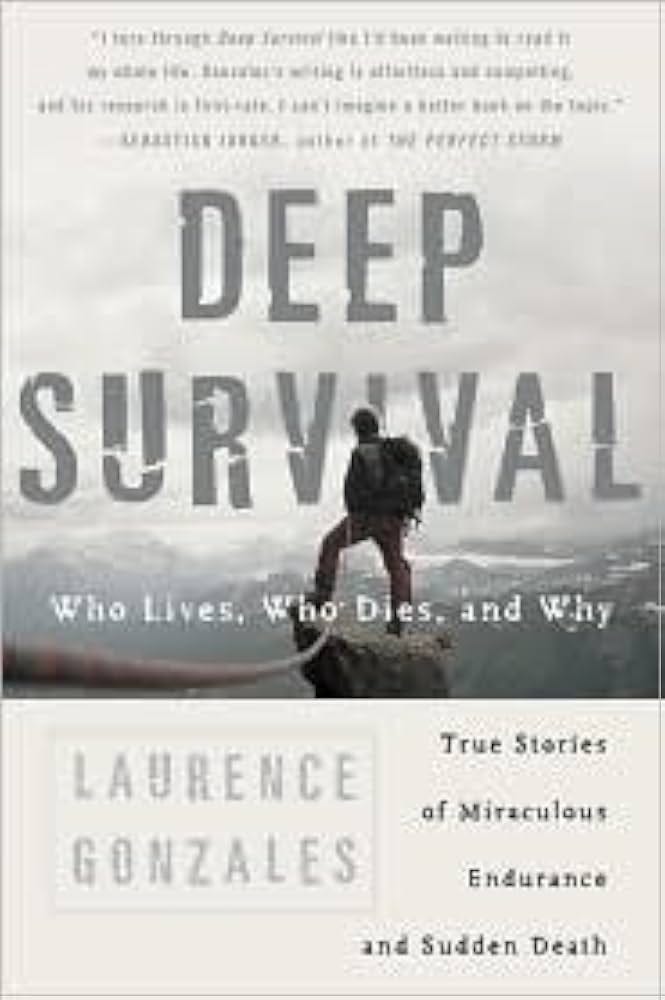
Contribution: the cost of emotional attachment to a forecast. Gonzales shows, with bodies, what happens when people cannot let go of an expected future.
…Still on my shelf
I’m still missing Jane McGonigal and several others from this list, but it’s a pretty good start and I can’t wait for the next one!
This is my first list. What am I missing? Please comment with your suggestions!